Ensure General Data Protection Regulation (GDPR) Compliance with RecordPoint

The General Data Protection Regulation is a data privacy regulation that covers the European Union. It's designed to empower individuals with control over their personal information and how businesses use it. Compliance with this landmark data privacy rule can be difficult, but RecordPoint can help, ensuring your organization avoids the costly penalties and reputational damage associated with non-compliance.

How RecordPoint can help

Applying these principles can be difficult, but it doesn't have to be. Companies seeking GDPR compliance need a solution designed to assist with these specific challenges.

RecordPoint is designed to enable GDPR compliance, enabling users to identify, protect, and manage data throughout its lifecycle. Key RecordPoint features that enable efficient GDPR compliance are:

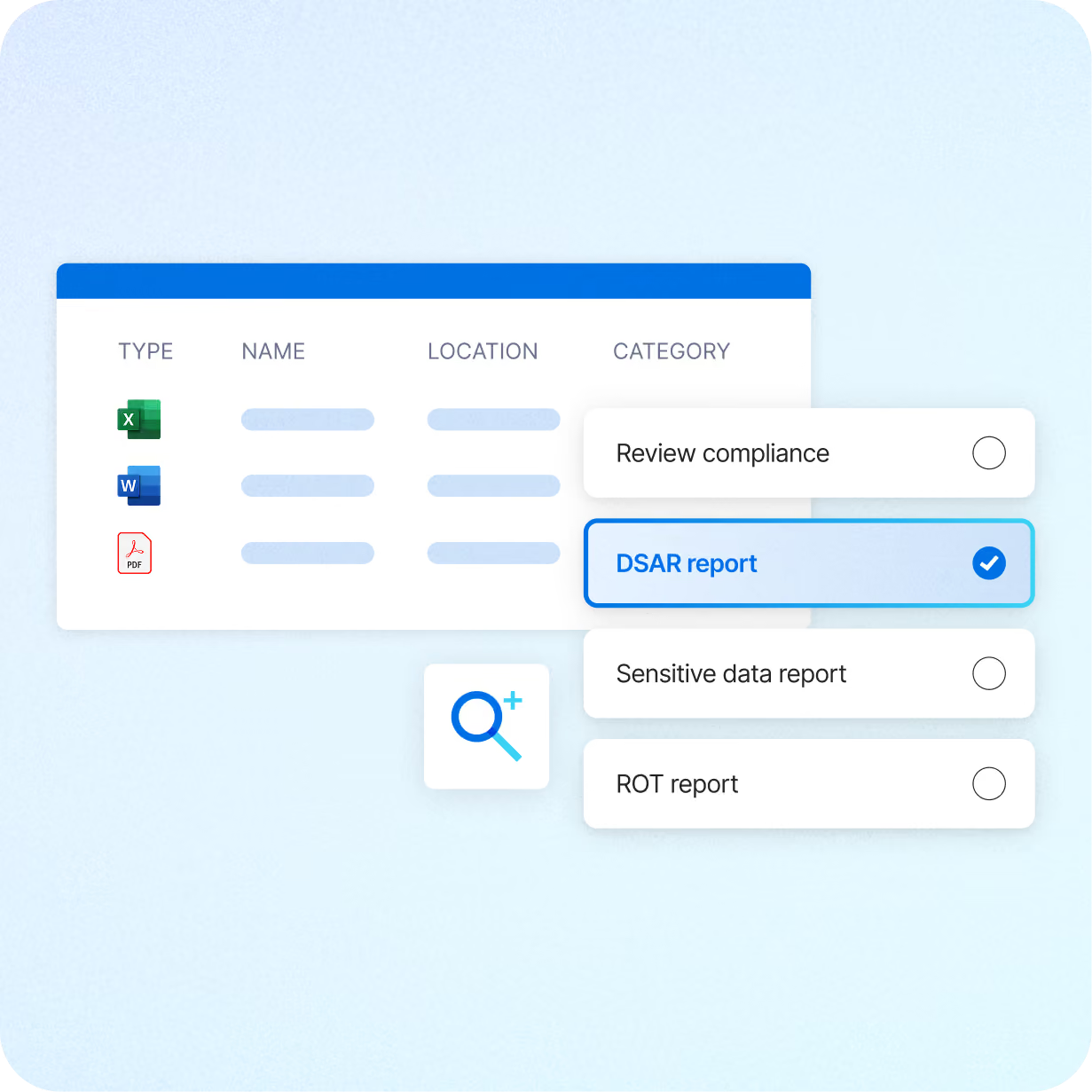
Easily respond to every data subject request

GDPR gives individuals the right to access, correct, erase, or restrict processing of their personal data — all within a one-month window. RecordPoint lets you search across all your connected data by content, not just metadata, so you can quickly surface what's held about any individual and build an accurate response without hunting through disconnected systems.

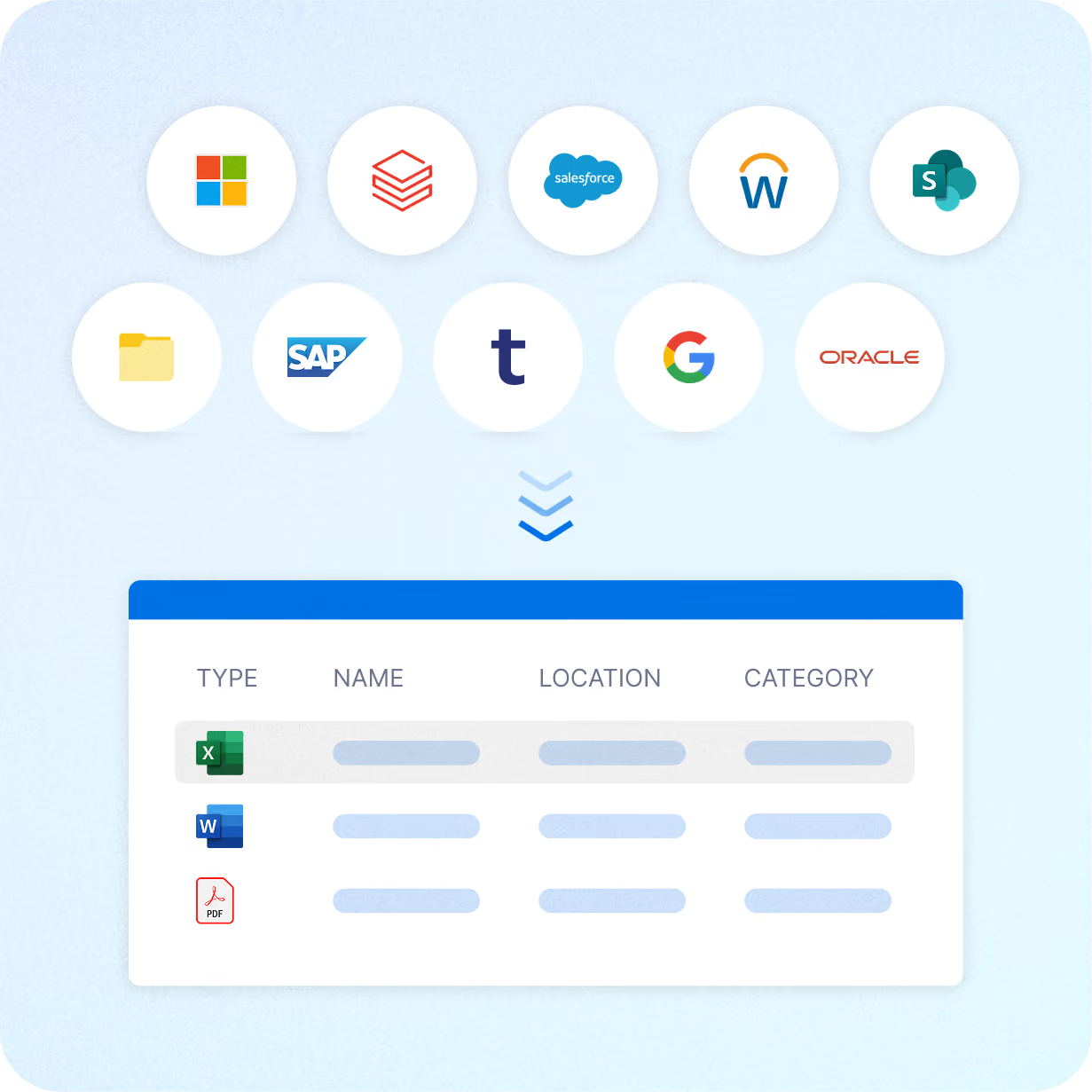
Know exactly where personal data lives

To honor right of access or make a deletion, you need to know where the data lives. With RecordPoint, you can discover and classify personal information across hundreds of connected business systems, in place, giving you a clear and complete picture of your data estate.

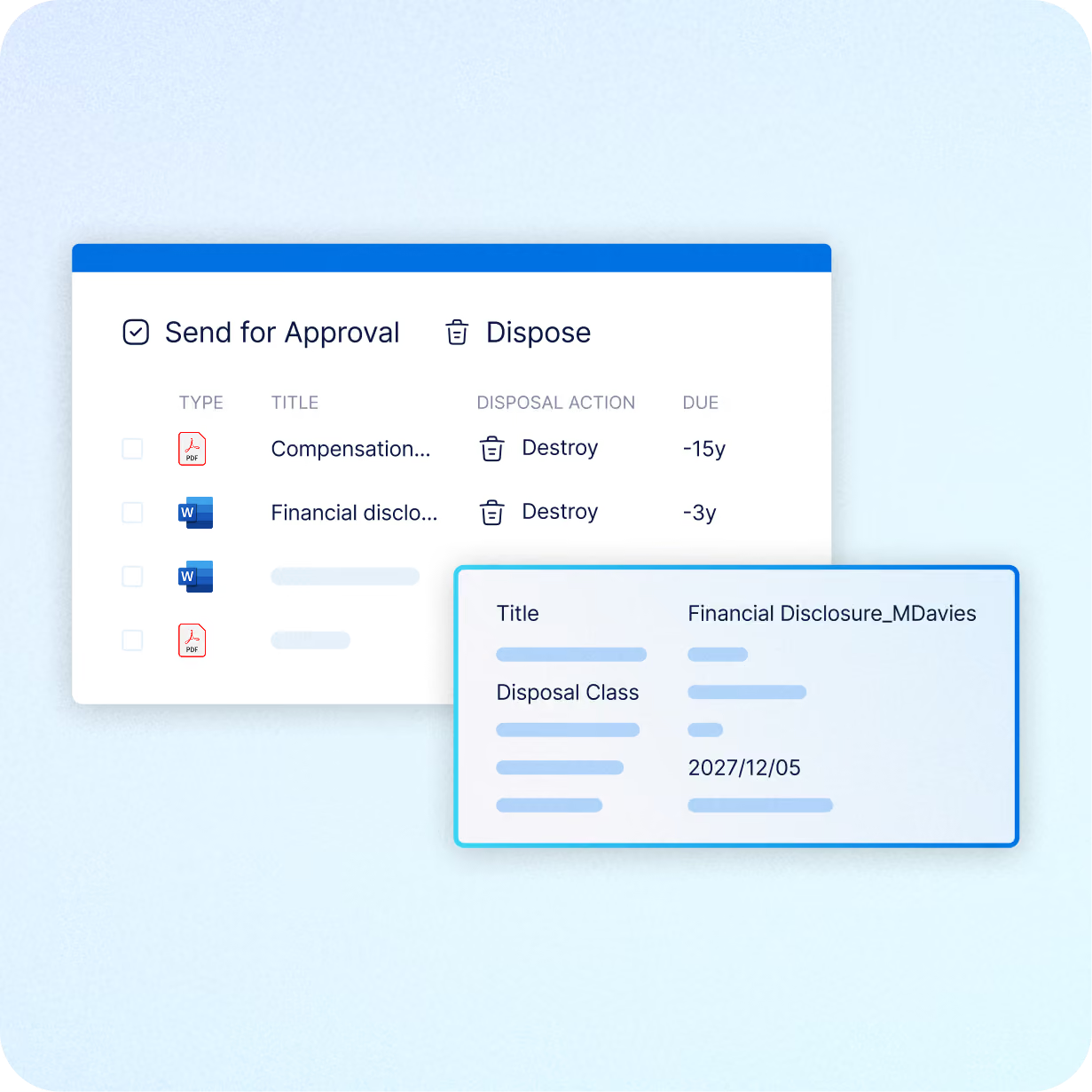
Dispose of the data you no longer need

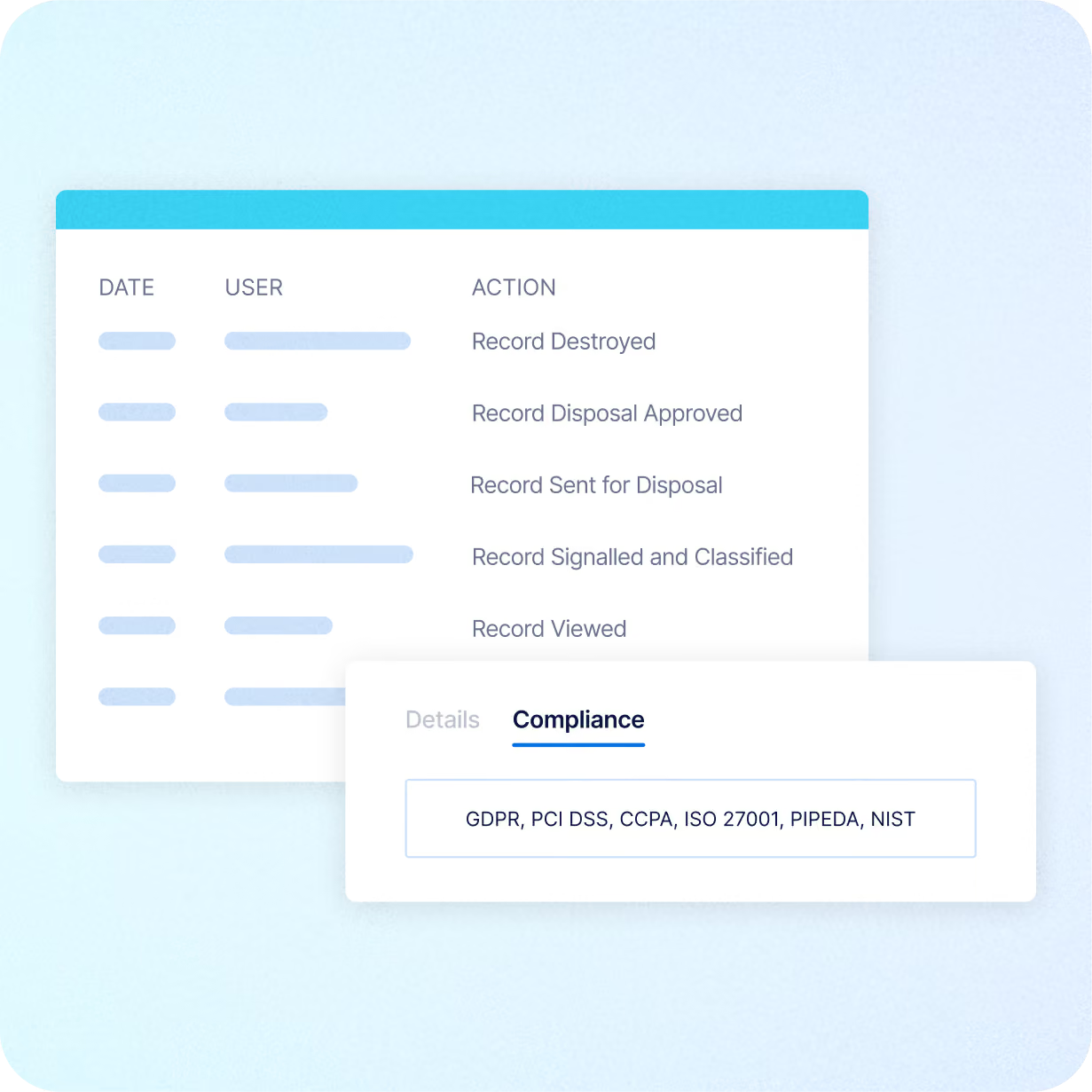
GDPR's storage limitation principle requires that personal data is kept no longer than necessary for the purpose it was collected. RecordPoint applies retention schedules to records automatically, triggers a review when the retention period ends, and routes disposal through an approval workflow before anything is deleted — so every disposal is documented, approved, and defensible.

Evidence-ready compliance, built in from the start

GDPR's accountability principle means organizations must be able to demonstrate they're compliant — not just claim it. RecordPoint captures every action taken on every record, including who did it, when, and which system it came from, merging activity from both your content sources and RecordPoint itself into a single, complete audit trail.

About GPDR

The General Data Protection Regulation (GDPR) is the European Union (EU) law that focuses on data privacy. It came into force on May 25, 2018. The regulation is designed to unify the patchwork of EU data privacy laws on a single standard with one set of expectations for every entity that handles the personal data of EU citizens and residents.

The rule at its core provides EU citizens and residents — called 'data subjects' in the law — with power over the data they choose to share with any entity. This includes for-profit businesses, nonprofits, and anyone who collects personally identifiable information of EU citizens, no matter where they are.

Key consumer rights:

Lorem ipsum

Right to be informed about how their data is being used, stored, and processed
Right to access personal data that data controllers possess
Right to rectify incorrect personal data that businesses hold
Right to erasure (to have a business delete the data it holds)
Right to data portability (to use their personal data for different services)
Right to prior consent
Right to withdraw consent to information collection at any time
Right to complain to the Information Commissioner
Right to not be subjected to automated decision-making

    Compliance with GDPR

    Anyone who accesses the data of EU citizens or residents needs to be in compliance with GDPR. Where you're accessing the data from doesn't matter; only that you're collecting data on EU citizens. For your organization to be in full compliance, and be able to fulfill the rights of data subjects, there are seven key principles:

    1
    Lawfulness, fairness and transparency

    Processing has to be lawful, fair and transparent. This means organizations need to be open with how they use the collected data in their operations.

    2
    Purpose limitation

    Data can only be processed for legitimate purposes that you explicitly specify to the data subject when you collected it. This means that you can't claim rights to use the data however you see fit; each use needs to be spelled out and easy to understand.

    3
    Data minimization

    You should collect and process only the data you absolutely need for the purposes specified. In practice this means limiting how much is collected in the first place, as opposed to collecting every possible piece of data.

    4
    Accuracy

    You must keep personal data accurate and up to date. This may require connecting with data subjects regularly to update the information you possess on them.

    5
    Storage limitation

    You may only store personally identifying data for as long as necessary for the specified purpose. Any data storage for longer than necessary could create issues.

    6
    Integrity and confidentiality

    Processing must be done in such a way as to ensure appropriate security, integrity, and confidentiality (e.g. by using encryption).

    7
    Accountability

    The data controller is responsible for being able to demonstrate GDPR compliance with all of these principles.

    Penalties for noncompliance

    Up to
    2% of  revenue
    Up to
    €20 million

    The penalties for noncompliance with GDPR or for violations are potentially severe. There are two levels, or tiers, of financial penalties under this regulation.

    The lower tier of punishments could result in a fine of up to €10 million, or 2% of the firm’s worldwide annual revenue from the preceding financial year depending on which amount is higher.

    This set of violations includes infringements related to:

    • Articles 8, 11, 25-39, 42, and 43 violations relate to organizations that collect and control data, called "data controllers" in the legislation and those that are contracted to process data, or data processors. These groups must adhere to rules governing data protection, lawful basis for processing, and more.
    • Articles 42 and 43 violations relate to accredited bodies charged with certifying organizations. These organizations must execute their evaluations and assessments without bias and via a transparent process.
    • Article 41 relates to monitoring bodies that have been designated to have the appropriate level of expertise. They must demonstrate independence and follow established procedures for handling complaints or reported infringements in an impartial and transparent manner.

    The higher tier of violations go directly against the core "right to be forgotten" and "right to privacy" that are the very soul of the GDPR. These fines could be up to €20 million, or 4% of the firm’s worldwide annual revenue from the preceding financial year. This category of fines relate to:

    • The basic principles for processing (Articles 5, 6 and 9)
    • The conditions for consent (Article 7)
    • The data subjects’ rights (Articles 12-22)
    • The transfer of data to an international organization or a recipient in a third country (Articles 44-49)
    • Any violation of member state laws adopted under Chapter IX
    • Non-compliance with an order by a supervisory authority

    These fines can be significant, so it's vital that you comply with GDPR when doing business with European citizens.


    Frequently asked questions

    Do I still have to comply with GDPR if my business doesn't have a local office in the European Union?
    What kind of data does GDPR protect?
    Have more questions about GDPR compliance or looking for additional details? Reach out to our friendly team - we're happy to help you navigate it.
    Contact Us