How RecordPoint can help
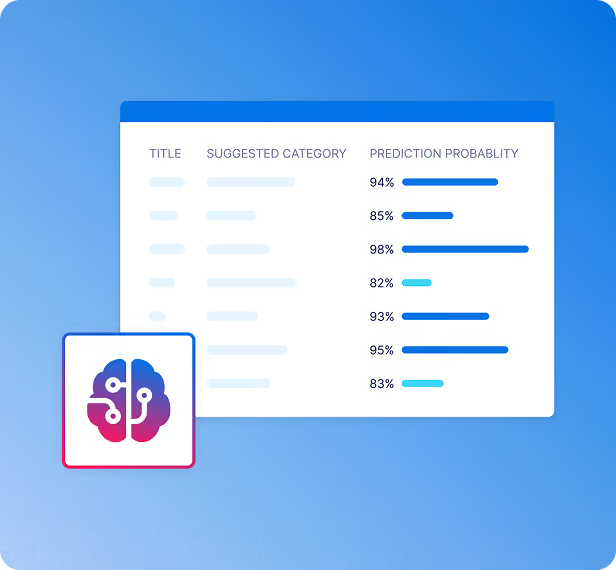
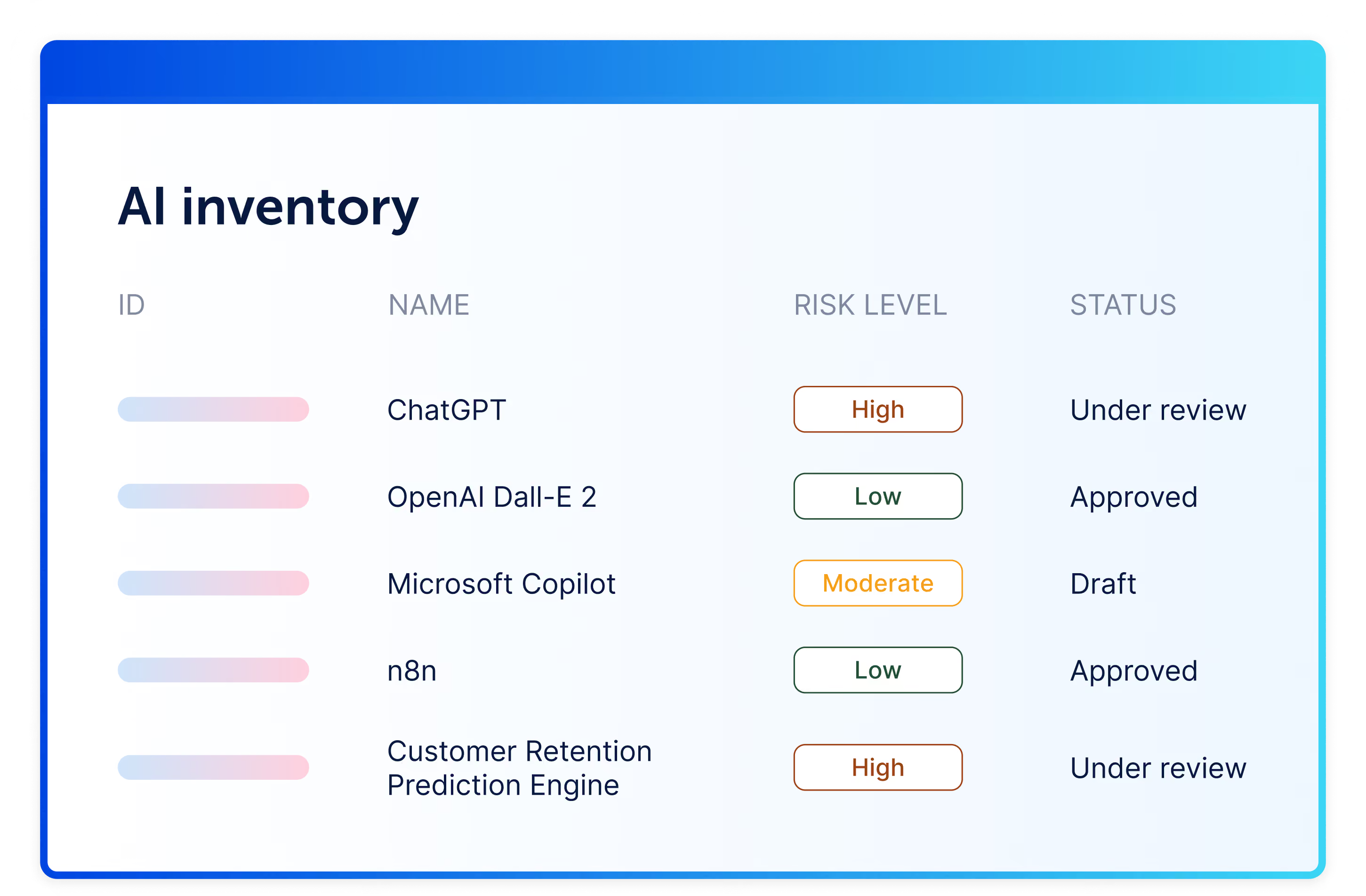
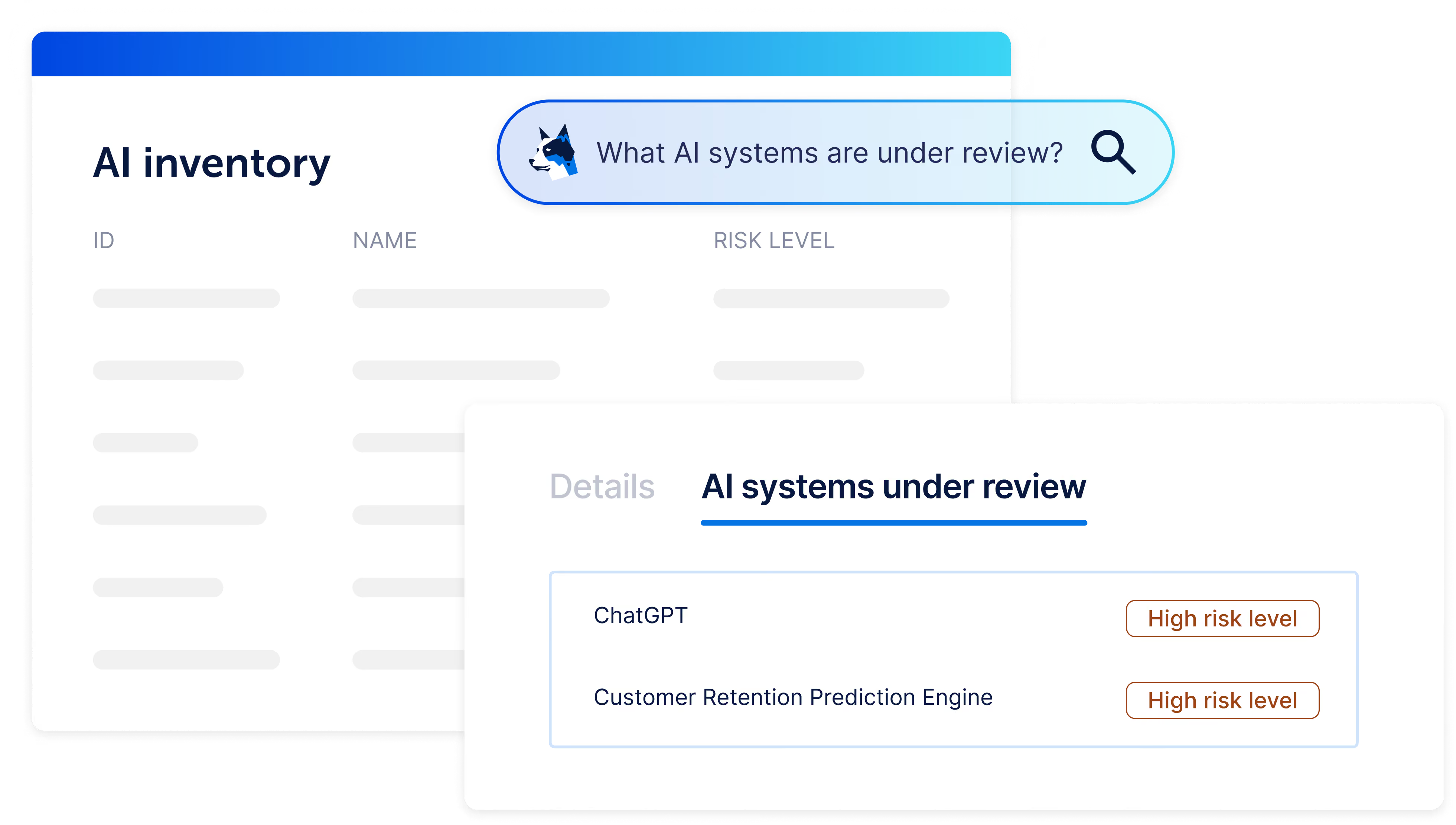
RecordPoint can help organizations facilitate their EU AI Act compliance with several key features, including:
The EU AI Act (Regulation (EU) 2024/1689) is the world's first comprehensive law governing artificial intelligence. It sets risk-based obligations for organizations that develop, deploy, or supply AI systems connected to the EU market, spanning data governance, record-keeping, transparency, and human oversight. With RecordPoint, you can govern the data and systems behind your AI, and stay ready to prove it.

Lorem ipsum
Any organization that develops, deploys, or supplies high-risk AI connected to the EU market must meet the Act's core obligations. For high-risk systems, the main requirements are:
Establish and maintain a continuous, documented process to identify, evaluate, and mitigate risks across the AI system's lifecycle.
Ensure training, validation, and testing data is relevant, sufficiently representative, examined for bias, and as free from errors and as complete as possible for the intended purpose.
Keep documentation that shows how the system meets the Act's requirements, ready to provide to regulators.
Automatically log events over the system's lifetime so its behavior can be traced and reconstructed.
Make the system transparent enough that deployers can understand its output and use it correctly.
Design systems so people can effectively oversee them, intervene, and stop them when needed.
Ensure the system performs consistently and resists errors, faults, and manipulation.
Operate a documented quality management system covering the obligations above.
Register high-risk systems, retain documentation, and monitor performance after the system is on the market.
The EU AI Act carries some of the steepest penalties in technology regulation. The most serious breaches, involving prohibited AI practices, can reach 35 million euros or 7% of global annual turnover, whichever is higher. Breaches of high-risk or transparency obligations can reach 15 million euros or 3%, and supplying incorrect or misleading information to authorities up to 7.5 million euros or 1%. Caps are set proportionately, with lower ceilings for SMEs and start-ups.
Regulatory breakdowns, expert commentary, and real-world case studies: everything you need to decode complex EU AI Act requirements, build a defensible AI governance strategy, and learn from how regulated organizations are preparing.